At the B2 level of Italian, learners achieve independent language use. They can communicate fluently and spontaneously with native speakers and manage complex, abstract, and professional topics. This level emphasizes accuracy, nuance, argumentation, and stylistic flexibility across different contexts.
The main areas covered include:
Listening Skills
Understanding extended speech, lectures, interviews, and discussions on both familiar and unfamiliar topics.
Following complex arguments and recognizing different viewpoints in debates.
Understanding most films, television programs, and radio broadcasts in standard Italian.
Speaking Skills
Expressing ideas clearly and in detail, supporting opinions with arguments and examples.
Participating actively in discussions and debates.
Explaining advantages and disadvantages of different perspectives.
Giving structured presentations on academic or professional topics.
Adapting language according to formal, informal, and professional contexts.
Reading Skills
Reading and understanding newspaper articles, essays, reports, and contemporary literary texts.
Identifying tone, style, and implicit meaning.
Understanding argumentative texts and recognizing persuasive techniques.
Writing Skills
Writing structured essays, reports, and formal correspondence.
Developing coherent arguments with logical organization.
Summarizing information from different sources.
Writing detailed descriptions and narratives with stylistic variety.
Grammar
Verb Conjugations and Moods:
Full mastery of present, past, and future tenses.
Subjunctive mood (congiuntivo presente, passato, imperfetto).
Conditional tense (condizionale semplice e composto).
Hypothetical periods (Type 1, 2, and 3).
Passive forms and impersonal constructions.
Gerund and participle constructions.
Articles:
Advanced and stylistically appropriate use in complex structures.
Nouns and Adjectives:
Nuanced adjective placement and meaning changes.
Advanced agreement in complex clauses.
Pronouns:
Complex pronoun combinations.
Advanced relative pronouns (“cui,” “il quale”).
Use of particles such as “ci” and “ne.”
Prepositions:
Advanced use in idiomatic and abstract expressions.
Prepositional verbs and fixed expressions.
Vocabulary
Abstract and thematic vocabulary related to society, politics, environment, media, and culture.
Professional and academic terminology.
Idiomatic expressions and colloquial language.
Connectors for structured argumentation (tuttavia, pertanto, nonostante, inoltre).
Cultural Awareness
In-depth understanding of contemporary Italian society and media.
Awareness of historical and cultural references in conversation.
Recognition of regional variation and stylistic register differences.
Ability to interpret cultural nuances and implicit meaning.
B2 learners can interact with fluency and spontaneity, develop complex arguments, and adapt their language to diverse communicative contexts.
Learning Plan
Subjunctive mood (present, past, imperfect)
Conditional (simple and compound)
Hypothetical periods (Types 1, 2, 3)
Passive and impersonal constructions
Advanced use of “ci” and “ne”
Complex relative pronouns
Gerund and participle constructions
Reported speech
Advanced connectors for argumentation
Regular and irregular verbs in:
– All indicative tenses
– Subjunctive mood
– Conditional mood
– Infinitive and compound forms
– Formal and professional register usage

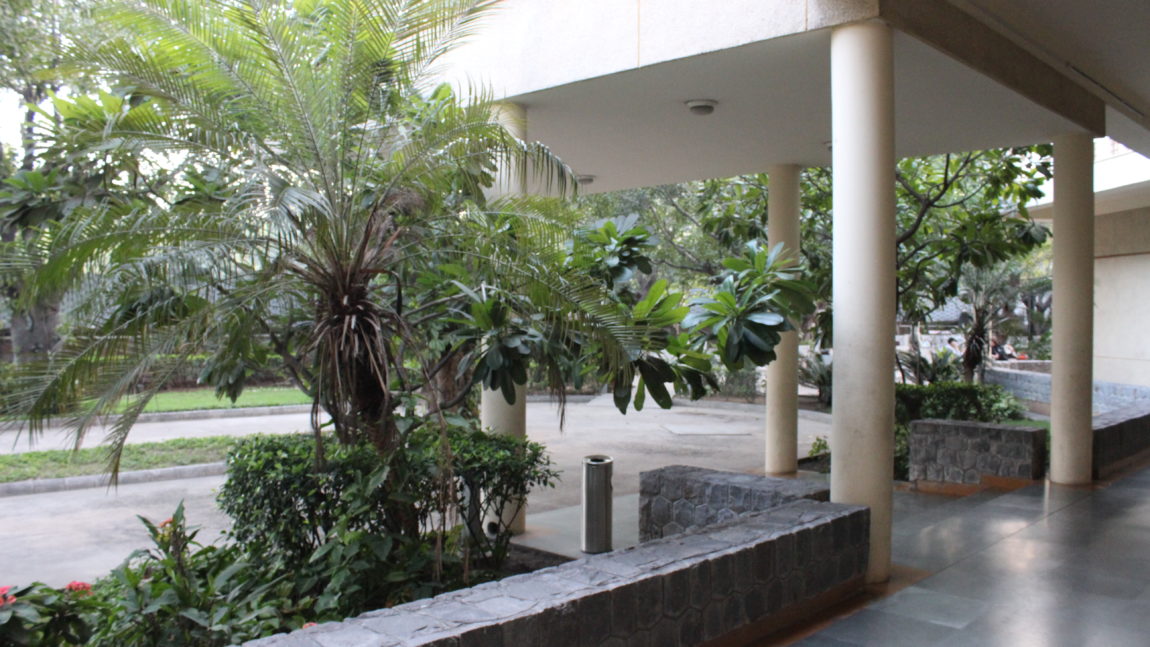
Me and my friend were really interested in studying Italian, so we came across the Cultural Centre. When I visited the campus for the first time, I liked the ambiance and there was something about this place that made me want to connect to it more. Italian at the centre is taught in a very active way and the teachers constantly communicate with the students which really makes sure that each one of us has completely understood the concept. The best thing about their methods is to incorporate a lot of activities which make the learning fun and exciting!

I enjoy learning Italian from the teachers at the IIC as they are very good at explaining and helping us to understand each and every topic. I would highly recommend Italian Embassy Cultural Centre to anyone willing to learn Italian.

I am a student at Istituto Italiano di Cultura. I was very interested in learning Italian language when I found this place online. I started my course in April. The ambiance is very nice and they have a beautiful Italian cafeteria! Teachers here are very gentle and sweet and they make teaching very enjoyable. I love to come here everyday to study Italian.