At the B2 level of Italian, learners achieve an intermediate proficiency, focusing on practical communication and the ability to handle everyday situations in Italian-speaking contexts. The key areas covered typically include:
Listening Skills
- Understanding the main points of clear standard speech on familiar topics such as work, school, leisure, and travel.
- Following conversations, announcements, and short explanations in contexts like public transport, shops, or restaurants.
Speaking Skills
- Engaging in simple but sustained dialogues on topics like family, hobbies, preferences, or plans.
- Narrating events, experiences, and describing dreams, hopes, and ambitions.
- Offering brief explanations and expressing opinions on common topics.
- Participating in simulated real-life situations, such as making reservations, asking for directions, or shopping.
Reading Skills
- Comprehending short to medium-length texts, such as emails, articles, advertisements, and brochures.
- Identifying essential details and extracting information from notices, instructions, and basic formal documents.
Writing Skills
- Producing simple connected text on topics of personal interest.
- Writing informal emails or letters to friends or acquaintances.
- Summarizing familiar stories, events, or experiences.
Grammar
- Verb Tenses: Mastery of the present, passato prossimo, imperfetto, futuro semplice, and conditional tenses (e.g., “vorrei,” “sarei”).
- Modal Verbs: Deeper use of “potere,” “dovere,” and “volere” across various tenses.
- Pronouns: Use of direct and indirect object pronouns (e.g., “lo,” “la,” “gli,” “le”) and reflexive pronouns.
- Prepositions: Correct use of common prepositions and prepositional phrases.
- Conjunctions: Introduction to linking phrases like “mentre,” “perché,” “quindi.”
- Introduction to simple subjunctive (congiuntivo) in set phrases.
Vocabulary
- Expanding lexicon related to everyday life: food, clothing, transportation, holidays, and hobbies.
- Basic workplace and school-related vocabulary.
- Expressions for discussing emotions, preferences, and routines.
Cultural Awareness
- Familiarity with Italian customs, traditions, and holidays.
- Learning about Italian geography, famous landmarks, and regional diversity.
- Insights into daily life and social etiquette.
Learning Plan
Subjunctive mood (present, past, imperfect)
Conditional (simple and compound)
Hypothetical periods (Types 1, 2, 3)
Passive and impersonal constructions
Advanced use of “ci” and “ne”
Complex relative pronouns
Gerund and participle constructions
Reported speech
Advanced connectors for argumentation
Regular and irregular verbs in:
– All indicative tenses
– Subjunctive mood
– Conditional mood
– Infinitive and compound forms
– Formal and professional register usage

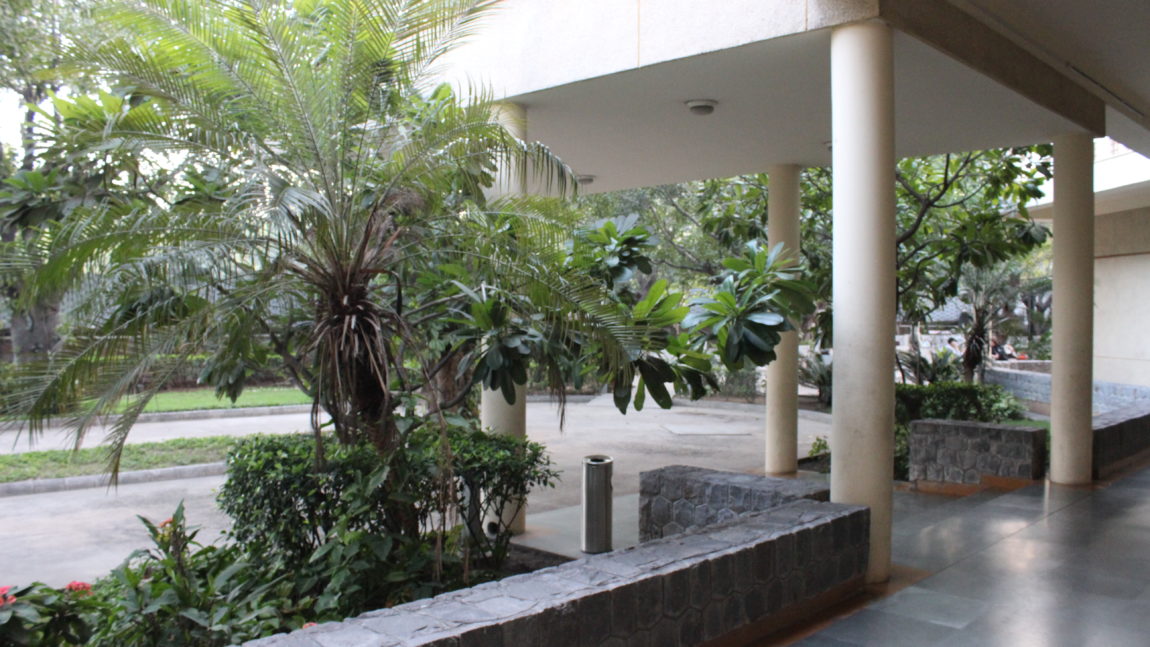
Me and my friend were really interested in studying Italian, so we came across the Cultural Centre. When I visited the campus for the first time, I liked the ambiance and there was something about this place that made me want to connect to it more. Italian at the centre is taught in a very active way and the teachers constantly communicate with the students which really makes sure that each one of us has completely understood the concept. The best thing about their methods is to incorporate a lot of activities which make the learning fun and exciting!

I enjoy learning Italian from the teachers at the IIC as they are very good at explaining and helping us to understand each and every topic. I would highly recommend Italian Embassy Cultural Centre to anyone willing to learn Italian.

I am a student at Istituto Italiano di Cultura. I was very interested in learning Italian language when I found this place online. I started my course in April. The ambiance is very nice and they have a beautiful Italian cafeteria! Teachers here are very gentle and sweet and they make teaching very enjoyable. I love to come here everyday to study Italian.